CUDSA Communication Model
- Assignment Task Blog
- May 14, 2026
- Academic Writing
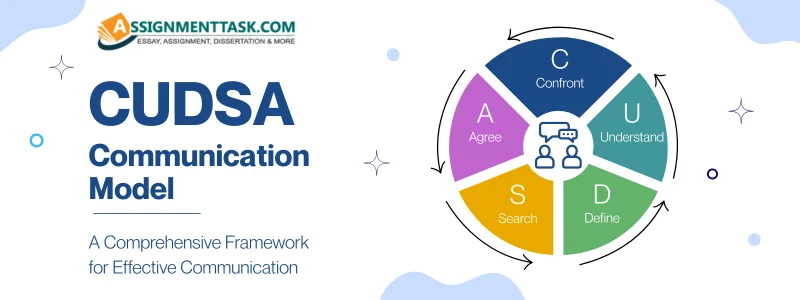
Workplace conflicts can escalate when staff disagrees. This can trigger fifth conversations to lose direction. The CUDSA communication model responds to the dispute pattern by guiding the corporate discussions in 5 stages: confront, understand, define, search, and agree. This structure often shows clarity to the organization before moving forward. In this blog, we will discuss how the CUDSA model works.
Many students struggle to explain this model effectively in academic tasks, so taking guidance from assignment writing professionals can help them understand conflict resolution concepts, improve case study writing skills, and present workplace communication examples more accurately and professionally in their assignments.
Need help understanding the CUDSA communication model and workplace conflict examples? Connect with assignment experts for accurate and well-structured solutions.
What is the CUDSA Communication Model: Meaning, Purpose, and How It Works?
The CUDSA communicator model is a highly structured method for handling difficult organizational conversations in a step-by-step manner. The full acronymic confront, understand, define, search, and agree.
Each of these terms represents a very distinct state in any organizational discussion. The model is a structured approach to prevent people from skipping crucial steps.
Here, the "confront" refers to initiating the issue in a very different way, rather than easily. This understanding needs a very active listening before taking the necessary actions. Here, you also need to define the focus on fitting out exactly what the real problem is. This search involves exploring the best solutions. This agreement meets a very close choice.
This structure is very useful since it allows the conversion down. A lot of conflicts escalate when there is a sharp jump from emotion to the solution, without understanding the real issue.
The CUDSA communication model reduces the communicator by separating the problem from the solution, facilitating good progression. This sequence gives a good structure to the conversation rather than relying on instinct.
Get Trusted and Reliable High-Quality Assignment Help Online in UK by Professionals Today!

Key Benefits of the CUDSA Model for Effective Conflict Resolution
The key benefits of the CUDSA communication model are explained:
-
Structured, Systematic Approach: The CUDSA offers a very clear, step-by-step process to remove ambiguity from the comfort resolution, helping individuals move from emotional utility to a logical solution.
-
Separating People from the Issues: This model encourages individuals to confront behaviors rather than resort to personal attacks. This reduces defensiveness and creates a better environment through peaceful dialogues.
-
Encouraging Active Listening with Empathy: pausing to understand the other's perspective helps the interrupted person better understand the underlying issues.
-
Preventing Hatch or Poor Solutions: the model delays seeing the solutions until it is clearly defined by preventing common mistakes of fixing the symptoms rather than the basic causes.
-
Promoting Yuan Gains: this is a win-win strategy. This model focuses on long-term collaboration rather than winning. This helps to attain positive relationships.
- Enhancing Emotional Control: By using this model at the right times, the parties can maintain a cool professionalism.

Get Academic Services at AssignmentTask
Step-by-Step Guide to the CUDSA Conflict Resolution Process
CUDSA model steps are as follows:
-
Confront or clarification (C): "confront" means bringing up the issues into the open and defining what any discussion can focus on within the said conflict, and working for a resolution. It frames the topic before presenting opinions, either by competing or by setting the first step in the right direction.
-
Understand (U): Here, the "understand" means getting the facts before you make a decision. Here, deliberate active listening works. You need to clarify the unclear points here by reflecting on the key elements and verifying their meaning. Here, your focus needs to be on achieving accuracy rather than agreement. Sometimes discussions fail because people assume the intent rather than verify it. The commonest mistake here is listening for a chance to respond rather than understanding.
-
Define (D): "define" here means reducing your concern to a very clear point by observing the issue in the process of conflict resolution. Rather than seeking habitual patterns, your focus should be more specific to behavior or the discussion outcomes. You always need to set shorter limits for emotional triggers, as this reduces exaggeration. Here, you cannot mistake older complaints for recent issues. This will make your organizational problem less clear and harder to hold the accountable people.
-
Search (S): This search moves the discussion from diagnosis to the options. This stage always supports the structured decision-making process and provides proper guidance on probable solutions.
- Agree (A): Here, the issues become quite clear, and all the options are narrowed down. Thus, the focus also shifts to confirming the specific course of action. A few unclear closes can lead to problems in the future. You can make a mistake here by assuming any alignment without stating it properly.
The CUDSA steps explanation above provides a clear overview of the entire process across any corporate field.
Practical Workplace Example of the CUDSA Model in Use
Let us take a workplace conflict-handling UK example: a marketing team is creating a client campaign. The analysis reports for the previous month were late, which has delayed progress. So things are getting worse, and the person in charge is blaming the marketing analyst. Let us apply this situation with the CUDSA model:
-
Confront: In any scheduled meeting, the person in charge explains the concern very clearly. Suppose the last 3 reports were delivered after the said deadline, affecting the timeliness of the planning.
-
Understands: Here, the analyst says the new data set was added in the middle of the week, which led to the delay. The project lead listened to that, then asked questions to clarify the issues and confirmed the events.
-
Define: They then agree that the main issue is just shifting the data expectations on witty, any augmentations on deadlines, but not with the lack of effort.
-
Search: Both parties took 2 options- either they should block the mid-week charges or extend the reporting deadline by 1 day.
-
Agree: They now decide that new data requests will move to the next cycle unless marked urgent, and the effect will be reviewed after one month.
Make your conflict management assignments more impactful with expert-written case studies, practical examples, and professional academic assistance.
Ready-to-Use CUDSA Conversation Template for Workplace Discussions
-
Confronting the Situation: You need to address it directly, but calmly. Script: I want to discuss our workflow with you in this meeting.
-
Understanding What Others Have to Say: Here, you need to listen actively to gain insight into their perspective. Script: This is my perspective, but I want to listen to your point of view too.
-
Defining the Problem: Here, you need to listen jointly to find the core issues. Script: I feel that we can both agree on this situation to find a solution.
-
Searching for the Solutions: This is a teenage form of collaboration to find a solution together. Script: What can we all do to resolve this issue together?
- Agreeing on Action: This is the commitment stage. Script: Let us all agree on this new plan A and plan B, and implement them altogether.
The CUDSA conversation template can be arranged as mentioned above.
Confused about workplace communication models and case study writing? Get reliable assignment help to achieve better grades and deeper subject understanding.
CUDSA vs Other Conflict Resolution Models: When Should You Use It?
The CUDSA vs other models:
-
CUDSA: You can use it when you need a very structured approach to understand the various perspectives of any organizational issue deeply. It is used to rebuild trust and find a very good solution.
-
Thomas-Kilmann Conflict Mode Instrument (TKI): This model is used to identify personal styles and to adjust behavior based on the ascribed and cooperative approach.
-
LEAPS: It is used in very high-emotion situations within any organization, such as dealing with a very angry client or customer.
- Interest-Based Relational (IBR) Approach: This model best preserves the relationship and focuses on treating people with respect. And focusing on their interests.
The comparison of conflict resolution models mentioned above gives you an idea of the differences between them in practice.
Challenges and Limitations of the CUDSA Model in Conflict Management
This is not a universally effective structured conflict management model. The CUDSA model's ability to provide clarity depends heavily on the context. The limitations of the CUDSA model are as follows:
-
If you use the communication models and the crypts instead of tools, the flaws become clearer.
-
One of the biggest challenges in conflict management is that it is ineffective in situations of power imbalance, where one party fears what will happen; as a result, this structure may not reduce the risk.
-
One of the most common drawbacks of structured conflict is that it requires significant emotional investment.
- There is confusion about how to vary the crinum, with different teams having different ideas about how to use the framework most effectively.
Save your time and reduce academic stress by getting high-quality conflict management assignment help from experienced professionals online.
Conclusion
In conclusion, understanding the CUDSA communication model is essential for managing workplace conflicts effectively and improving organizational communication. It helps individuals identify disputes, analyze situations properly, and reach mutual agreements in professional settings. However, preparing a detailed conflict resolution case study with practical examples requires strong research and analytical skills.
Thus, you can see in this blog that writing the best conflict resolution case study is not an easy job. The CUDSA model example workplace is difficult to write in a real-world scenario. Thus, you always need the best instant assignment help online. AssignmentTask.com is your top choice in this regard.
Why Assignmenttask.com?
-
We are always the No.1 provider of academic writing services in UK.
-
Top grades are always assured in our assignment help UK services.
-
Our online UK business communication assignment help is well-known.
- Our experts will provide you with the best conflict resolution techniques in the UK.
Contact us soon for academic assistance online!

James Abe